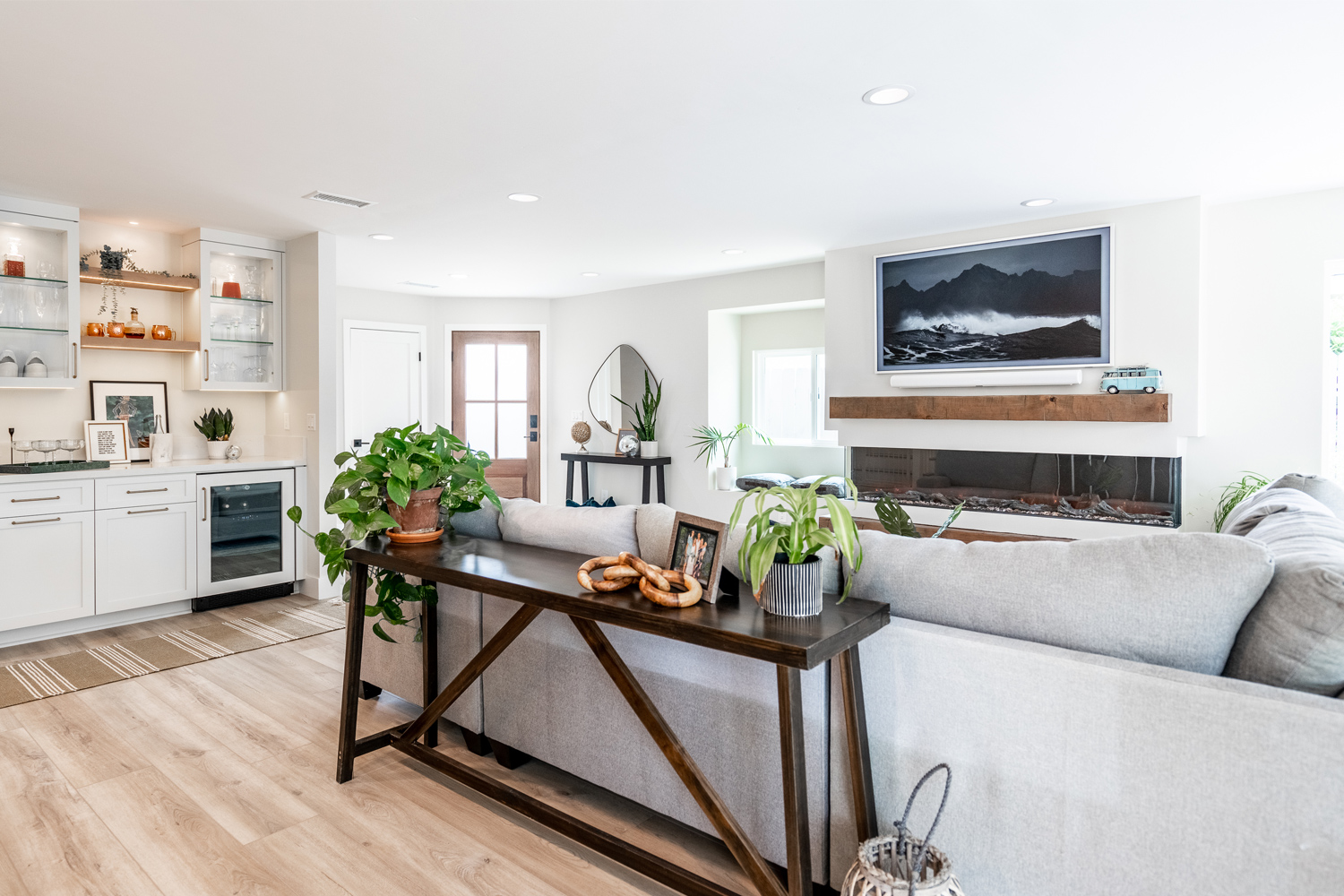
Most homeowners who feel like their house no longer fits them assume the answer is moving. But that instinct skips over a question worth asking first: what, exactly, isn’t working?
If the answer is the neighborhood, the commute, or the school district, moving is probably right. But if what isn’t working is the layout, the kitchen, the lack of a primary suite, or a backyard that nobody uses, you may be looking at a renovation problem, not a property problem. The decision between whole home renovation vs moving deserves careful thought before you start attending open houses.
Green Room Design-Build works with homeowners across San Diego who find themselves at exactly this crossroads. This piece helps you think through that choice clearly.
Remodel vs Move: The Core Question
Before you compare costs or scope, the most useful question is simpler: do you love where you are?
Location is the one thing a renovation will never change. The neighborhood, the schools, the proximity to what matters: none of that moves with your furniture. If those things are working for you, they represent significant value you’d be giving up in a whole home renovation vs moving decision.
When homeowners in established neighborhoods decide to renovate or move, the ones who renovate often discover that what they thought was a property problem was actually a design problem. And design problems are solvable.
When a Whole House Renovation Makes More Sense Than Moving
Not every home is worth renovating, and not every renovation scope makes financial sense. But there are clear situations where staying and transforming your current home is the better decision.
You Love the Location
If the neighborhood, the lot, the proximity to what matters, or the community you’ve built around your home has real value, a full whole home renovation lets you keep all of that while building the house you want on the property you already own.
The Lot Has Potential the Current Structure Doesn’t Reflect
Some properties carry far more potential than the existing structure suggests. A lot with room for an addition, a backyard that could become an outdoor living space, or a footprint that could support a second story: these are opportunities moving can’t replicate. Home renovation vs buying a new home often comes down to whether your current lot can support the vision. If it can, staying is often the more effective path.
Your Home Is in a Market Where Comparable Properties Are Scarce or Expensive
In a competitive real estate market, finding a home that has everything you want in the location you want is difficult. In San Diego’s premium coastal communities, the purchase price of a comparable home often exceeds what a full-scale renovation costs. Running that math is worth the time.
Your Life Is Settled Around This Property
School-age children, established routines, and proximity to aging parents: these are real factors that moving disrupts. A well-executed whole house renovation keeps everything that matters about your current life intact while changing what isn’t serving you.
When Moving Is the Better Choice
There are situations where a renovation is the wrong answer.
If the neighborhood doesn’t fit your life, no amount of renovation changes that. If the lot is too small to accommodate what you actually need, you can’t renovate your way to more land. If the property has structural issues that make the scope impractical, moving is right.
The point isn’t that renovation always wins. It’s that the decision about whether to renovate or move deserves more analysis than “I want more space” before you assume moving is the answer.
What a Whole Home Remodel vs Moving Actually Costs
Most homeowners underestimate the full cost of moving. The purchase price of a new home is the starting point, not the total. Add agent fees, closing costs, moving expenses, any immediate improvements the new property needs, the emotional cost of leaving a familiar place, and the disruption to daily life, and the gap between “staying and renovating” and “moving” often narrows significantly.
A whole home remodel vs moving calculation should account for all of those factors, not just a surface comparison of renovation bids against listing prices. The property you renovate is already yours. The one you’re moving to isn’t, and getting it to the same standard of finish and function often takes time and additional investment after the purchase.
The right number to run is total cost of ownership over five to ten years, not just the immediate transaction cost.
What a Full Home Renovation Actually Covers
Homeowners who feel their house is too small or too inefficient sometimes don’t realize what a full renovation scope can accomplish.
A whole home renovation with a design-build firm isn’t just a refresh. It can reconfigure floor plans, add square footage through home additions, convert underused spaces, and update every major system. See what’s possible in the project portfolio.
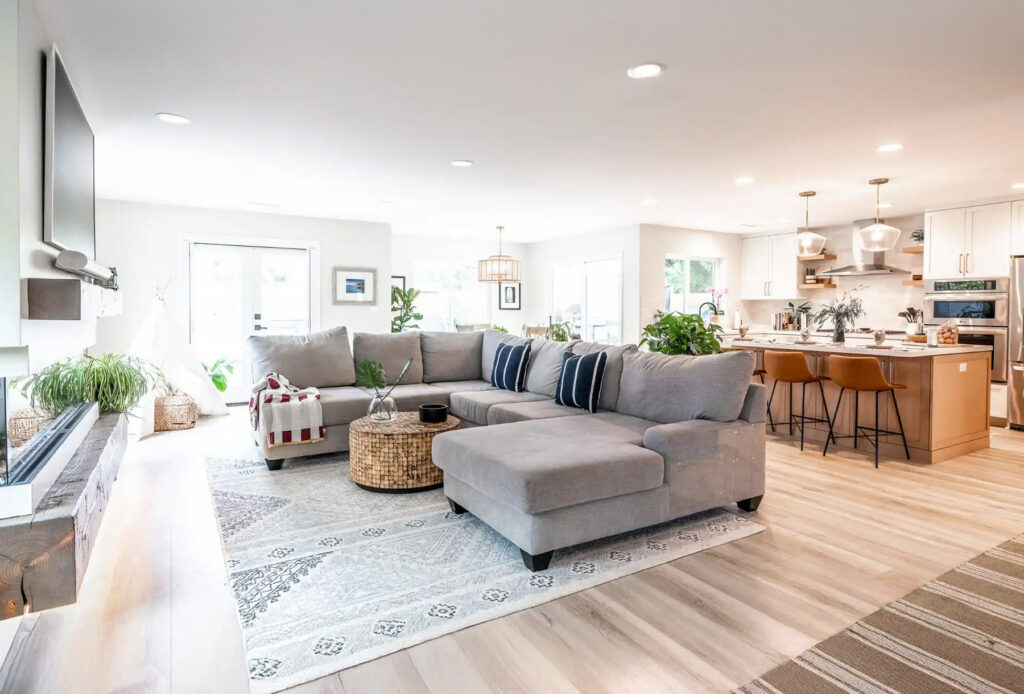
When homeowners go through this process, they often discover that the house they wanted to leave could become the house they want to stay in. The whole home renovation process is more transformative than most people expect.
How the Design-Build Model Changes the Whole Home Renovation vs Moving Decision
One reason homeowners default to moving is the perception that a large renovation is harder to manage than a real estate transaction. That perception is often accurate when the renovation is managed through a traditional model: separate architect, separate contractor, and coordination that falls to the homeowner.
With a design-build firm, the experience is different. One team handles design, permitting, and construction. Budget conversations happen alongside design decisions, and the homeowner has a single point of contact throughout.
Our process page walks through the full design-to-build sequence. When you see how a well-managed renovation works, the gap between “easier to move” and “easier to renovate” often disappears.
Making the Decision: Should I Remodel or Move?
Here’s a practical framework:
- Keep the location, change the house: if your lot and neighborhood have real value, renovation preserves what you can’t replace
- Do the full cost comparison: include agent fees, closing costs, and post-purchase improvements in the moving total
- Assess what can change: layout, square footage, systems, and finishes are all addressable; land and location are not
- Get a design conversation first: understanding what is possible on your property often changes the calculation
When the question is truly should I remodel or move, answering it well requires knowing what a renovation would actually do for your home.
Ready to Think Through Your Options?
If you’re weighing whether to renovate or move, we’d welcome that conversation.
Contact Green Room Design-Build to set up your first visit.
Frequently Asked Question
What is the main difference between renovating and moving?
Moving changes your location. Renovating transforms what you already have. The right choice depends on whether what isn’t working is the location or the structure. If the location is right, the question becomes what a renovation can accomplish on your specific property, which is exactly what a whole home renovation vs moving analysis should determine.
Is it cheaper to renovate or move?
Not always cheaper to move. Agent commissions, closing costs, moving expenses, and improvements to a new property add significantly to the total. Running the full cost comparison over a five to ten year horizon, not just the immediate transaction, often makes renovation more competitive than it initially appears.
What does a whole home remodel vs moving decision depend on?
It depends on location value, lot potential, scope, and full cost over time. If the location and lot are strong and the issues are structural or layout-related, a thorough renovation is often the more efficient path. If location is the problem, renovation won’t solve it.
What can a whole home renovation actually change?
More than most homeowners expect. A full renovation can reconfigure floor plans, add square footage, convert underused spaces, and update all major systems. When one team handles both design and construction, the result can be a fundamentally different home on the same property.
How do I know if my home is worth renovating?
The main factors are location and lot. If your neighborhood has real value and the lot can support what you want to build, renovation is worth a serious look. A design conversation is the most reliable way to understand what’s possible before deciding to list.