Adding an accessory dwelling unit (ADU) to your property is one of the more significant decisions a Solana Beach homeowner can make. It’s not just a construction project. It involves zoning compliance, permitting, design coordination, and construction management, each with its own requirements and moving parts. When those pieces are not managed well, the project slows down or stalls entirely.
That’s why doing your homework before breaking ground matters. Understanding what’s involved, what type of ADU fits your property, and who will manage the process makes a real difference in how everything goes. Working with experienced ADU builders Solana Beach who know the local codes, the coastal development guidelines, and the permitting process removes a significant amount of that uncertainty from the start.
This guide covers what homeowners in Solana Beach need to think through before building a custom ADU.
What Is an ADU and Why Are Solana Beach Homeowners Building Them?
An accessory dwelling unit is a self-contained living space built on the same lot as your primary home, with its own entrance, kitchen, bathroom, and sleeping area. In Solana Beach, where property values reflect the desirability of the coastal location, an ADU is a practical way to add livable square footage, create space for family members, or generate rental income from an existing lot.
The local zoning codes, HOA requirements, and coastal development guidelines here add layers of complexity that go beyond a standard inland project. Getting those details right from the start requires someone with genuine familiarity with this specific market.
Types of ADUs Worth Considering
Not every property supports every type of ADU. The right fit depends on your lot, your existing structure, and what you’re trying to accomplish. Here are the main ADU types we work with:
- Detached ADU: A standalone structure built separately from the main home. It offers strong privacy and works well on lots with adequate yard space.
- Attached ADU: An addition that connects directly to the existing home. It expands your footprint without requiring a fully separate structure.
- Garage Conversion: Converts an existing garage into a fully functional living space. This makes good use of a structure already on the property and often carries fewer zoning complications.
- Junior ADU (JADU): A smaller unit created within the existing walls of the primary home, typically from a bedroom or interior space. It comes with its own set of California-specific rules.
Each option involves tradeoffs around privacy, construction scope, permitting requirements, and how the space functions day to day. A property assessment is the right starting point before committing to any one approach.
Key Design Considerations for a Custom ADU
Once you’ve identified the ADU type that fits your property, the design phase is where the real work begins. A well-designed ADU functions efficiently, reflects the character of the main home, and works within the site’s constraints.
Open-Concept Layouts
ADUs work in tighter footprints than a full home. Open-concept floor plans help the space feel larger and more functional by reducing walls that close off natural light and airflow. Deliberate layout planning is what gets the most out of whatever square footage the site allows.
Indoor-Outdoor Connection
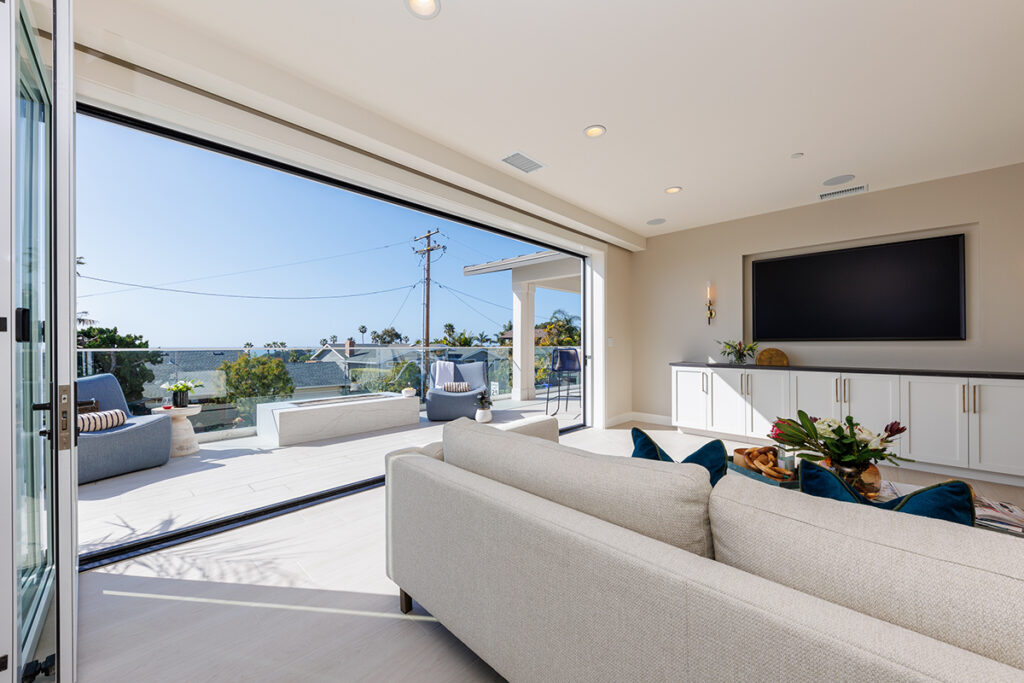
In Solana Beach, connecting interior living space to an outdoor area, whether a private patio, deck, or garden space, adds real quality to an ADU. It’s a design priority we bring to coastal projects because the climate here supports outdoor living throughout the year.
Space-Saving Solutions
Storage and functionality in a smaller footprint require careful planning. Vertical storage, built-in solutions, and multi-use spaces keep an ADU feeling organized and livable rather than cramped.
Material and Finish Selection
An in-house interior designer works with you to select finishes, fixtures, and materials that suit your style and perform well over time. Every choice gets compiled into a production package before construction begins, so nothing is left unresolved once work starts on site.
Permitting and Approval: What to Expect in Solana Beach
Permitting is where many ADU projects slow down or run into problems. In Solana Beach, a custom ADU typically requires a combination of the following:
- Structural engineering and architectural drawings
- City of San Diego building permits
- Title 24 energy compliance review
- HOA approval, if applicable to the property
- Zoning compliance review for setbacks, height limits, and lot coverage
Navigating these requirements takes real familiarity with the local process. As ADU builders in Solana Beach, we prepare all construction documents and manage every submittal on your behalf. Our team works directly with city officials, engineers, and HOA boards throughout the approval process, so you’re not left tracking down sign-offs or identifying what’s missing from a submittal.
How the Design-Build Approach Simplifies ADU Construction
Building an ADU through a design-build firm is meaningfully different from coordinating separate architects and contractors. With a design-build setup, the same team is responsible for both design and construction. Decisions made during design account for how the project will actually be built, which reduces the gaps that appear when separate firms are exchanging plans.
Here’s how our process works at Green Room Design-Build:
- First Visit: We visit your property, review the site, and spend time understanding your goals and the scope you’re considering.
- Second Visit: We meet at our Design Center, walk through the design-build process, and work toward an initial budget framework.
- Design: We start broad and narrow toward solutions that fit your goals, site, and budget. 3D modeling lets you see the ADU before construction begins.
- Review and Execute Agreement: We present a complete scope of work so expectations are fully aligned before anything is signed.
- Permitting and Engineering: We prepare and submit all construction documents and manage the approval process with the city, engineers, and HOA.
- Interior Design and Product Selection: Our interior designer works with you on finishes, fixtures, and materials, pulling every selection into a production-ready package.
- Construction: Our project managers oversee every trade and inspection through to completion, with regular updates and scheduled walkthroughs.
- Closeout: We conduct a final walkthrough, address remaining items, and deliver all documentation, including warranties and maintenance guidelines.
Why Local Experience Matters for ADU Builders in Solana Beach
Solana Beach sits within a coastal zone, which means development guidelines here go beyond what you’d encounter on a typical inland project. HOA requirements, Coastal Commission considerations, and city-specific setback and height rules all factor into what’s buildable on a given lot.
We’ve been working in this area since 2018 and understand the permitting requirements, the materials that perform well near the coast, and the design approaches that work within the constraints these properties present. That local familiarity is part of what we bring to every ADU project in Solana Beach and the surrounding San Diego communities we serve.
Ready to Start Planning Your ADU?
If you’re thinking about adding an ADU to your Solana Beach property, the right time to start is before you’ve committed to a design or direction. A first visit helps clarify what’s possible on your lot and what approach fits your goals.
Contact Green Room Design-Build to schedule your first visit and begin the planning process.
Frequently Asked Questions
What types of ADUs can be built in Solana Beach?
The main options are detached ADUs, attached ADUs, garage conversions, and Junior ADUs. Each works differently depending on lot size, existing structures, and zoning allowances. As ADU builders Solana Beach, we start every project with a full property assessment to determine which options are viable for your specific site before any design decisions are made.
Do I need permits to build an ADU in Solana Beach?
Yes. All ADU construction requires permits covering structural, electrical, plumbing, and zoning compliance. Projects in Solana Beach may also involve Title 24 energy compliance review and HOA approval. We handle the full permitting process in-house, preparing all required documents and working through city departments, engineers, and HOA boards to get approvals in place.
How does the design-build process work for a custom ADU?
Our team manages the project from the initial site visit through final closeout. We begin by assessing the site and understanding your goals, then develop concept plans and 3D renderings so you can see the space before construction begins. An in-house interior designer guides material and finish selections, and our project managers carry the build through every trade, inspection, and walkthrough to completion.
What design features work well in a Solana Beach ADU?
Open-concept layouts, indoor-outdoor connections, and well-planned storage tend to perform best in a coastal ADU. Connecting the living space to a private outdoor area adds real everyday value, given the local climate. We also pay close attention to material selections near the coast, where salt air and moisture make durability a genuine consideration.